Including parents in the treatment of children and adolescents with eating disorders is essential for effective recovery. Here are five compelling reasons:
1. Debunked Myths. Historical views blaming parents for eating disorders have been disproven, shifting the focus to inclusive care.
2. Best Practices. Current clinical guidelines advocate for family involvement, emphasizing that families are allies, not adversaries.
3. Better Outcomes. Research shows that family-based treatment leads to faster and more successful recovery compared to individual-focused therapy.
4. Supportive Allies. Parents can provide necessary support, enforce meal plans, and facilitate communication among treatment providers, especially when children struggle with cognitive challenges.
5. Empowered Parents. The rise of online support groups has equipped parents with knowledge and resources, allowing them to advocate effectively for their children’s treatment.
Engaging parents in recovery is a transformative approach, and Family-Based Treatment prioritizes parent involvement for lasting success.
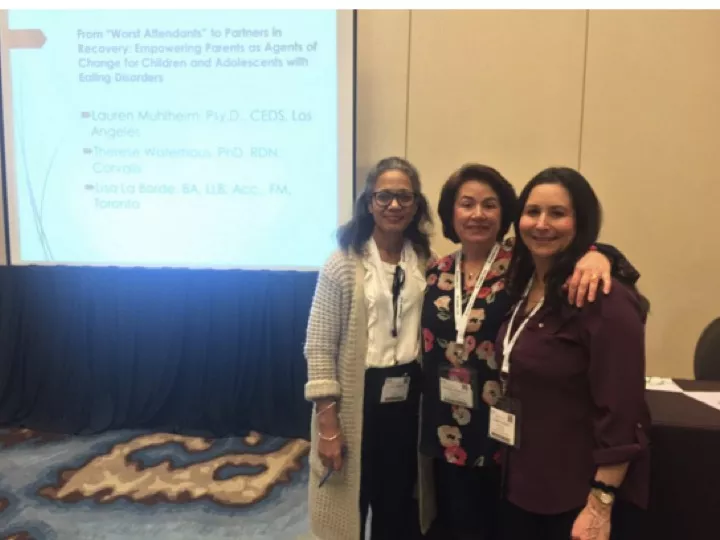
I had the honor of presenting a workshop along with Therese Waterhous, PhD/RDN, CEDRD., and Lisa LaBorde, Outreach Director for Families Empowered and Supporting Treatment of Eating Disorders (FEAST) at the IAEDP Symposium 2016. Our workshop was entitled, From “Worst Attendants” to Partners in Recovery: Empowering Parents as Agents of Change for Children and Adolescents with Eating Disorders.
A growing body of scientific research demonstrates that parents and caregivers can be a powerful support for a child in recovery from an eating disorder. This model of care is a radical shift from the traditional, individually focused therapeutic approach. Family-based treatment requires significant changes in how patients and families are treated within a clinical practice.
During my section of the presentation, I presented Five Reasons to Include Parents in treatment for youngsters with eating disorders. I share them here:
In the late 1800s, Gull suggested that families were “the worst attendants” for their children with anorexia nervosa. This set the tone for many years. More recent perpetrators of this viewpoint were Hilda Bruch and Salvador Minuchin. In the historical treatment of eating disorders, parents were blamed, and the children were taken away to be fixed by professionals. When ultimately sent back home, parents were told, “Step back.” “Don’t get into a battle for independence.“ “Don’t be the food police.”
These practices were based on early theoretical models for eating disorders that have not been supported by empirical studies. Research has not been able to identify any particular family pattern that contributes to a child’s eating disorder.
As the following clinical guidelines demonstrate, it is no longer the appropriate standard of care to exclude families from treatment.
The Academy for Eating Disorders’ position paper on The Role of the Family in Eating Disorders:
The Nine Truths About Eating Disorders consensus document, produced in collaboration with Dr. Cynthia Bulik, PhD, FAED, states:
The American Psychiatric Association (APA) Guidelines for Eating Disorders also advises:
On the one hand, patients with eating disorders (and especially younger patients) are often significantly impacted by malnutrition. Research shows they commonly have a decrease in brain grey matter, cognitive deficits, and anosognosia—a lack of awareness that they are ill. Recovering on one’s own is commonly difficult for an adolescent. Their brain is not fully developed. They may lack the cognitive ability to challenge negative thoughts, change behavior patterns, and resist urges. Furthermore, they commonly lack the independence that adult clients have to purchase and prepare their own food.
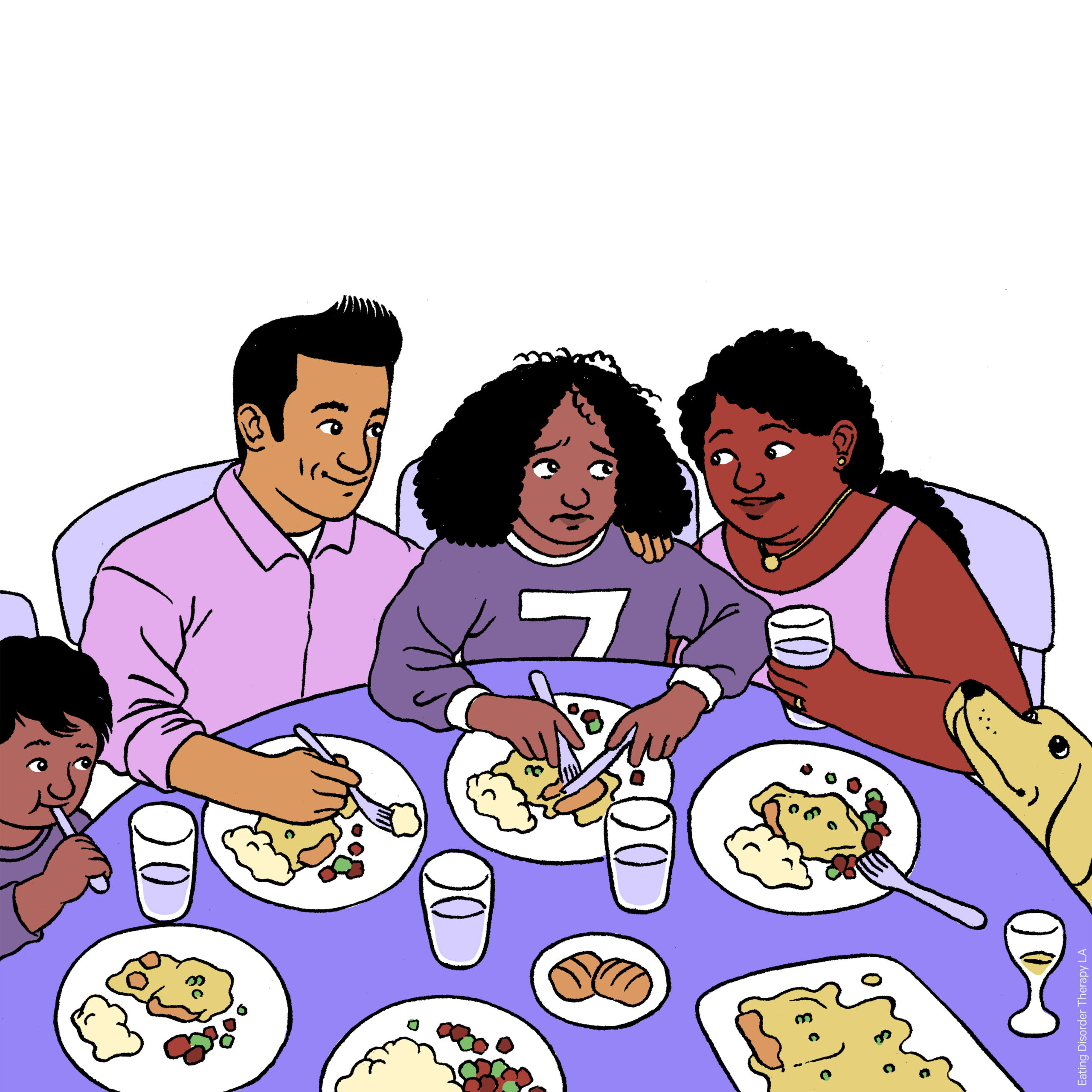
On the other hand, parents are there to take care of their children. They can do the heavy lifting. They can be authoritative and require children to eat. It can be difficult for a therapist to develop rapport with a reluctant and resistant adolescent. It is much easier for a therapist to develop a therapeutic alliance with the parents who do want their child to recover. In situations where there are multiple treatment providers, parents can help with the communication between team members, as they will likely be seeing them all. Lastly, parents typically buy the food for the household so they have the ability to execute the meal plan.
As an experienced FBT therapist in Los Angeles, I recognize that eating disorders often take years, not months, to fully resolve. There will rarely be a scenario in which a patient leaves home for a residential setting and comes home “cured.” The reality is that any treatment is only the first stop on the road to recovery. Full recovery takes sustained full nutrition and cessation of behaviors for an extended time period, and the family, in many cases, can help that happen. So whatever treatment model is used, FBT principles and training are vitally important for families.
In the past, mental health treatment was primarily private; the internet has changed that. Parent support and activist groups such as FEAST, Eating Disorder Parent Support (EDPS), March Against Eating Disorders, and International Eating Disorder Action have connected parents, given them access to scientific information that was not available to parents pre-internet, and given them the tools to organize. Social media has increased the pace of this information. Parents have access to evidence-based information and are demanding treatment that aligns with it. If they are shut out from treatment, they will hear from other parents that this is problematic. They may change providers if they are dissatisfied with the treatment their child is receiving
There is no greater love than the love of a parent for their child. To work with parents and empower them to help their children get well is one of the most rewarding aspects of my work. Family-Based Treatment is at the forefront of treatments that center on the role of parents. Learn more about our approach by getting in touch with our team at EDTLA today.
When a child or adolescent is struggling with an eating disorder, parent involvement isn’t just helpful—it’s essential. Family-based treatment (FBT) is a well-established, evidence-based approach that actively engages parents and caregivers in restoring nutrition, supporting medical stability, and guiding recovery at home.
You don’t have to manage this process on your own or feel sidelined in your child’s care. Through FBT, families receive education, structure, and professional support that allows parents to take a clear, empowered role in treatment while reducing confusion and burnout. At Eating Disorder Therapy LA, our Los Angeles–based therapists specialize in family-based treatment for adolescents with anorexia, bulimia, and related eating disorders. Taking the next step is simple:
When a child or adolescent is struggling with an eating disorder, parents play a critical role in recovery. Family-based treatment (FBT) equips caregivers with the guidance and support needed to restore health, improve medical stability, and help their child develop a safer, more sustainable relationship with food.
At Eating Disorder Therapy LA, we provide evidence-based care for individuals and families across all stages of life, including children, adolescents, college students, adults, andcaregivers. Our clinicians are trained in treating the full spectrum of eating disorders and related concerns. In addition to FBT, we offer specialized therapy for Anorexia Nervosa, Atypical Anorexia, Bulimia Nervosa, Avoidant/Restrictive Food Intake Disorder (ARFID), and Binge Eating Disorder, along with support for challenges such as excessive exercise, body image distress, and phobias related to swallowing, choking, or vomiting.
To ensure families can access care that fits their needs, our Los Angeles-based practice offers flexible treatment options, including online therapy and eating disorder group therapy. We also provide Small Group FBT and ARFID consultations, professional speaking engagements, school-based services, and clinical supervision for therapists seeking advanced expertise in family-centered eating disorder treatment.
For continued education and parent support, we invite you to explore our Eating Disorder Blog and Dr. Muhlheim’s books. When Your Teen Has an Eating Disorder and The Weight-Inclusive CBT Workbook for Eating Disorders (available in 2026). If you’d like to speak with our team, please call (323) 743-1122 or email Hello@EDTLA.com. We look forward to partnering with families on the path to lasting recovery.
Dr. Lauren Muhlheim, Psy.D., FAED, CEDS-C, is the founder of Eating Disorder Therapy LA. She is a licensed psychologist with extensive experience providing evidence-based treatment for eating disorders across the lifespan. Her clinical work centers on family-based treatment (FBT), helping parents take an active, informed role in restoring nutrition, supporting recovery at home, and guiding adolescents back toward healthy development. She specializes in treating anorexia, bulimia, binge eating disorder, ARFID, and related concerns. She is also one of the few FBT-certified therapists in Los Angeles. Dr. Muhlheim is the author of When Your Teen Has an Eating Disorder and The Weight-Inclusive CBT Workbook for Eating Disorders, and has developed one of the only FBT training courses for dietitians. Licensed in California, Indiana, New York, and Oregon, with a Florida telehealth license, she is widely recognized for her leadership in family-centered, weight-inclusive eating disorder care.
TL;DR Family-Based Treatment (FBT) is not just for teens; it can be effective for adults,…
TL;DR Parenting a teen with an eating disorder during Family-Based Treatment (FBT) is challenging. Parents…
TL;DR Excessive exercise is a common symptom in teens with eating disorders, potentially worsening their…
TL;DR Family-Based Treatment (FBT) is a specialized, evidence-based therapy for children and teens with eating…
TL;DR Early intervention is crucial in addressing eating disorders, which can lead to severe health…
TL;DR Transitioning to college can be exciting yet challenging, especially for those with a history…