Early Intervention with Family-Based Treatment (FBT) for Eating Disorders

A teen girl sits next to a doctor who is writing notes. Does your teen show early signs of an eating disorder? Get equipped with the right guidance from a n FBT therapist in Los Angeles, CA.

TL;DR Early intervention is crucial in addressing eating disorders, which can lead to severe health issues if not treated promptly. Family-Based Treatment (FBT) is a leading, evidence-based approach tailored for teens, emphasizing parental involvement to support recovery. Despite its potential benefits, parents often hesitate to intervene due to uncertainty about the early signs of these …

Read more

Expert Guidance: When to Add an Individual Therapist in FBT-Phase 1

Picture of a teen in an individual therapy session. Is an individual therapist during FBT necessary? An expert family-based treatment therapist in Los Angeles, CA, explains why it might not be a great idea.

TL;DR In Family-Based Treatment (FBT) for teen eating disorders, experts discourage adding an individual therapist during Phase 1 (nutritional rehabilitation). Most teens do not require individual therapy at this stage, as it can undermine the family’s role and the focus on nutritional restoration. Experts agree that individual therapy should only be considered if there are …

Read more

Are We Setting Recovery Weights Too Low? Insight From an FBT Therapist

Photo of a rusty doctor scale. Setting the right goal weight in eating disorder recovery can feel intimidating, but an experienced FBT therapist can help. Discover the tools you need for healthy success through Family-Based Treatment in Los Angeles, CA.

TL;DR At the 2018 International Conference on Eating Disorders, experts discussed the low BMI threshold (18.5) often used to define recovery from anorexia nervosa, suggesting it’s inadequate for many individuals, especially those with higher weights or atypical anorexia. Many parents and practitioners advocate for a more individualized approach to recovery weights, emphasizing that a higher …

Read more

How Much Food to Feed?

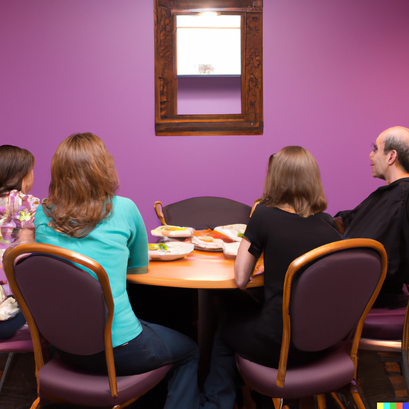
Family having dinner and unhappy in FBT [Image description: family of 2 adults and two kids and the teen girl looks very unhappy about eating] Represents a potential family in California doing FBT for their teen's eating disorder

In Family-Based Treatment (FBT), we charge families with nourishing their teens back to health through meals at home. Because FBT is a parent empowerment model, parents are often given little specific guidance about how to do this. If you are like other families with whom I’ve worked, now that you understand this important point, you …

Read more

Return to Exercise and Eating Disorder Recovery in Teens During FBT

Return to exercising during FBT for teen eating disorders [Image description: drawing of a teen running on a treadmill] Represents a potential teen undergoing FBT for an eating disorder in Los Angeles, California

Excessive exercise is often a component of various eating disorders, including anorexia nervosa, bulimia nervosa, atypical anorexia, OSFED, and subclinical eating disorders. It is a symptom that affects up to 80% of those with an eating disorder (Quesnel et al., 2023). By expending energy, exercise may contribute to the negative energy balance that may trigger …

Read more

Supporting your Child or Other Loved One with an Eating Disorder Through the Holidays

Supporting Child with Eating Disorder Over Holiday in Los Angeles, California [Image description: photo of a Black family preparing a meal together and all the family members are dressed up] represents a potential family supporting a loved one with an eating disorder during the holidays

By Carly Poynter, AMFT, staff therapist The holidays are a challenging time to navigate for most people. The holidays are even more challenging for those who struggle with their relationship with food. As we prepare for the holiday feasts and festivities, there are a few things to consider, especially when you have a child or …

Read more

Externalizing an Eating Disorder: When, Why, and How Do You Do That and Who is “Ed” Anyway?

Externalizing your eating disorder in Los Angeles, California [Image description: a drawing of a girl facing a monster] Represents a potential teen with an eating disorder in Los Angeles, California externalizing her eating disorder

Externalizing an eating disorder is a therapeutic strategy. Jenni Schaefer’s book Life Without Ed, co-written by her therapist Thom Rutledge, popularized this strategy The book summarizes Jenni’s recovery from an eating disorder. Jenni describes how in her treatment she learned to personify the eating disorder as “Ed,” an abusive boyfriend. As explained in the blurb …

Read more

How do I Parent My Teen During Family-Based Treatment? When to Set Limits

Parenting During FBT [Image description: photo of one teen pushing another in a shopping cart] Represents a potential family with teens getting help for an eating disorder in Los Angeles, California

Parenting during FBT is a different type of parenting. Parents doing Family-Based Treatment (FBT) often struggle with “normal parenting concerns” and setting limits while doing FBT. They’re refeeding their teens at home, doing the hard work often done by professional staff at treatment centers, but they still have to parent. It’s exhausting. Their teens who …

Read more

FBT Treatment Team Members

FBT Treatment Team Including Therapist, Dietitian, and Medical Doctor in Los Angeles, California [Image description: Purple scrabble tiles spelling "FBT Treatment Team"]

Family-based treatment (FBT) is the leading evidence-based treatment for teens with anorexia nervosa and bulimia nervosa. In an ideal world, every person with an eating disorder would have access to a full treatment team. This team could include a therapist, a dietitian, a medical doctor, and a psychiatrist. However, manualized FBT calls only for a …

Read more

This Halloween, Serve Candy to Your Teen in Recovery

Halloween Candy

A Family-Based Treatment (FBT)-approach Halloween can be scary for teens with eating disorders for the wrong reason: the candy! Most teens with eating disorders are only willing to eat a restricted range of foods. Expanding this range is an important goal of treatment, with the reintroduction of fear foods being a key step. Candy tends …

Read more

Skip to content