Eating Disorder Recovery When Grieving: A Therapist’s Perspective

A vivid blue morpho butterfly resting with open wings, for an article on eating disorder recovery when grieving.

TL; DR Grief is one of the most powerful threats to eating disorder recovery, and one of the least talked about. Written from personal experience, this blog explores how the sudden loss of a mother tested years of hard-won recovery from emotional eating and bulimia. And what it actually took to stay the course through …


Read more

Is Weight Suppression Driving Your Binge Eating? Exploring the Research

Drawing of two smiling women in purple sweaters, for an article on how weight suppression can drive binge eating.

TL;DR If you have bulimia nervosa, being at a weight lower than your body’s natural high point ( known as weight suppression) may actually be fueling your binge eating. When the body is pushed below its natural weight, hormones like leptin drop, metabolism slows, and appetite increases, making bingeing the body’s way of fighting back …

Read more

Why Can’t I Stop Binge Eating? Insight From a Therapist

A young man takes a big bite of a donut at a café, for an article on why you can't stop binge eating.

TL; DR If you’re stuck in a cycle of binge eating, the solution may be the opposite of what you’d expect. Restriction and dieting are most likely the root cause of your bingeing, not a lack of willpower or emotional weakness. Our bodies are biologically wired to overeat in response to food deprivation, a survival …

Read more

Five Reasons Parents Should Be Included In Their Child’s Eating Disorder Treatment

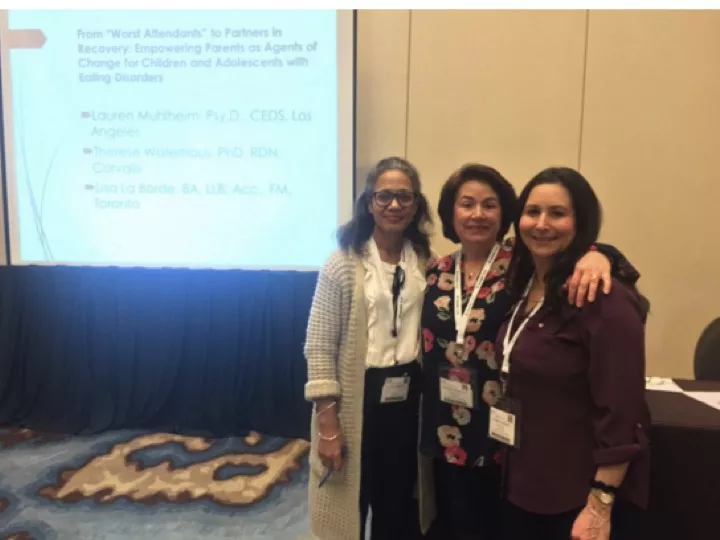
Three speakers at the 2016 IAEDP Symposium, for an article on including parents in their child's eating disorder treatment.

TL; DR Including parents in the treatment of children and adolescents with eating disorders is essential for effective recovery. Here are five compelling reasons: 1. Debunked Myths. Historical views blaming parents for eating disorders have been disproven, shifting the focus to inclusive care. 2. Best Practices. Current clinical guidelines advocate for family involvement, emphasizing that …

Read more

With a Little Help From My Family: Who is FBT For?

Two Asian women eating together, illustrating meal support and Family-Based Treatment (FBT) for adults.

TL;DR Family-Based Treatment (FBT) is not just for teens; it can be effective for adults, too. Originally designed for adolescents with anorexia and bulimia, FBT involves parental support in meal planning and supervision, which is crucial for recovery. Recent evidence suggests its application extends to young adults and older individuals, with many successfully using it …

Read more

How Do I Parent My Teen During Family-Based Treatment? When to Set Limits

One teen pushing another in a shopping cart, illustrating when parents should set limits during Family-Based Treatment (FBT).

TL;DR Parenting a teen with an eating disorder during Family-Based Treatment (FBT) is challenging. Parents need to balance normal parenting with the unique demands of recovery, which often involves refeeding at home. It’s important to distinguish between behaviors stemming from the eating disorder (like defiance during meals) and typical teenage rebellion. During high-stress moments related …

Read more

Is the (Eating Disorder) Treatment Your Child is Getting FBT? A Therapist Explains

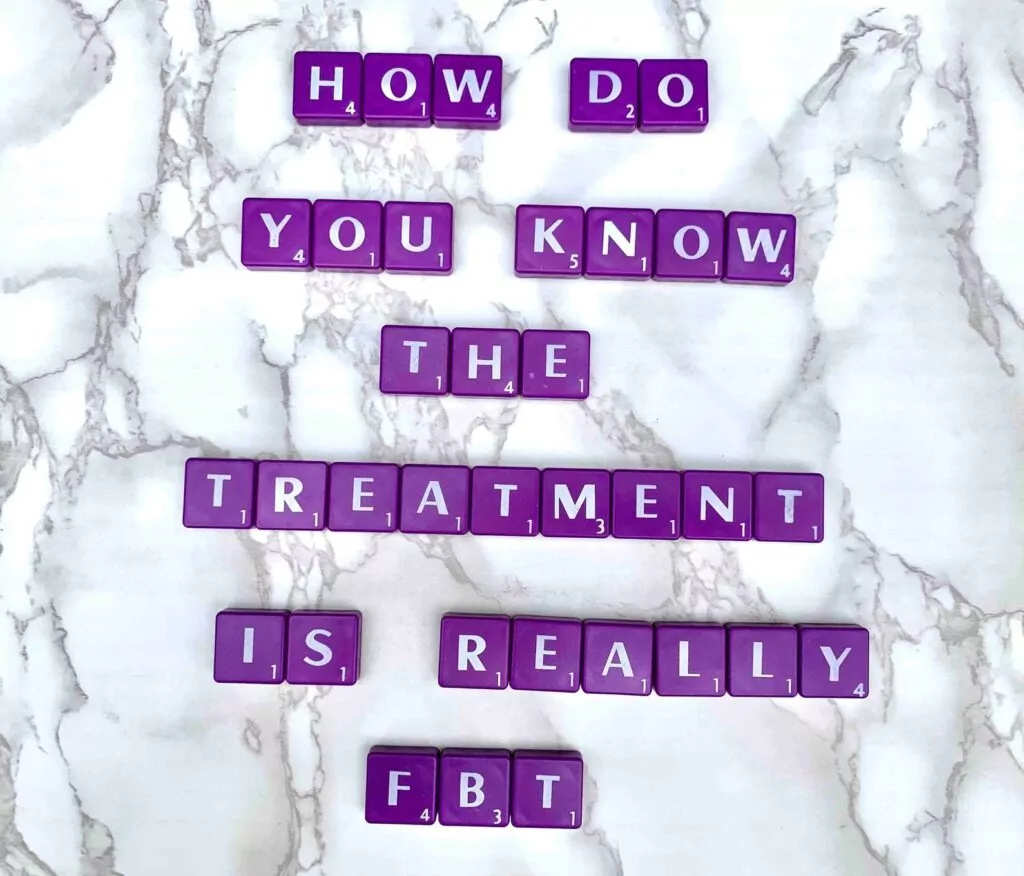
Purple Scrabble tiles asking "How do you know the treatment is really FBT?" for an article on recognizing true Family-Based Treatment.

TL;DR Family-Based Treatment (FBT) is a specialized, evidence-based therapy for children and teens with eating disorders, developed in the 1970s and 1980s. It’s important for parents to differentiate true FBT from general family therapy or other approaches, as not all treatments that claim to be FBT are fully compliant with its structured methodology. Key indicators …

Read more

Maintaining Recovery During Short Lunch Times

A neon sign spelling "EAT," a reminder to keep eating lunch in eating disorder recovery even when lunch breaks are short.

Guest post by 2024-2025 doctoral extern, Natalie Cynamon.  School lunchtime is ideal for catching up with friends, decompressing, or watching a show on your phone. However, it’s not long until the bell rings again, telling you it is time to return to class. With so little time to do what you want, it can be …

Read more

Structuring Your Eating Disorder Recovery Environment

A hand writing in a planner, illustrating structuring your eating disorder recovery environment.

Recovery is challenging! I am repeatedly moved and impressed by the courage of my patients as they work through recovery from an eating disorder. One strategy that can help support recovery is a careful ​structuring of one’s recovery environment. This applies to adults working individually in treatment as well as to families helping adolescents to recover from …

Read more

College, COVID, and Eating Disorders: What You Need to Know

A woman wearing a mask in front of a computer, for an article on college, COVID, and eating disorders.

As I’ve talked about in depth, the transition to college away from home is challenging for most young adults. It is especially fraught for young adults with eating disorders. In that article, I provided an Eating Disorder College Readiness Checklist. The article provides guidance for parents of students entering college after a history of an …

Read more

Skip to content