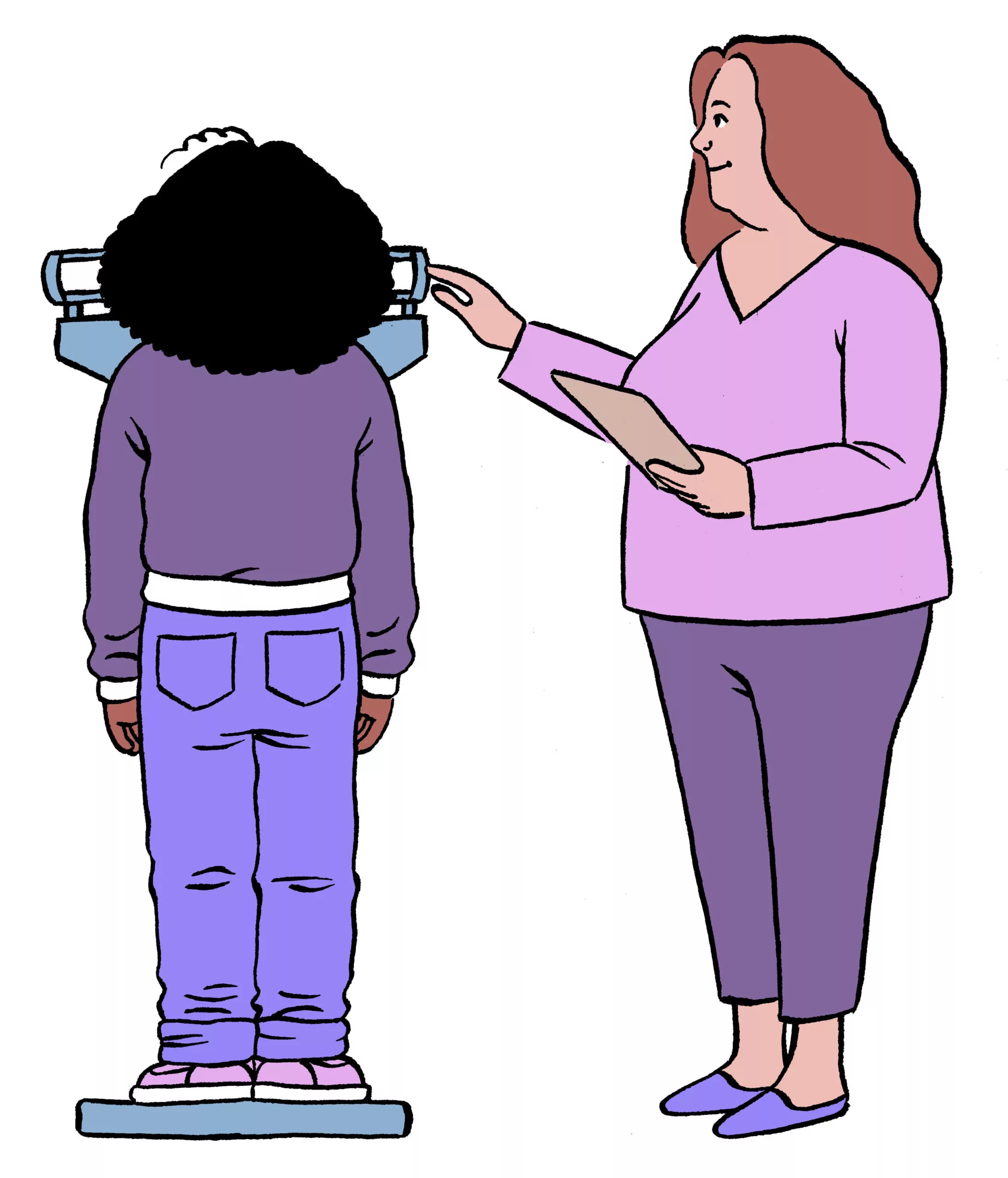
Drawing by Aidan Yetman-Michaelson
Weight gain is a vital part of recovery from eating disorders for individuals of all sizes, including those with Atypical Anorexia and bulimia. However, there’s a lack of consensus on how to set appropriate recovery weights. Research shows that complete weight restoration is often essential for psychological recovery, as it helps alleviate eating disorder symptoms. In family-based treatment (FBT), we prioritize full weight recovery for all patients, using individual growth records to set personalized recovery weights based on a person’s unique growth curve rather than population averages. Many professionals tend to set recovery weights too low due to weight bias, which can hinder full recovery.
In our approach, we consider growth curves, BMI percentages, and consult with pediatricians to ensure each individual is on the right path to recovery. It’s important to challenge the fear of weight gain, as a healthy weight is crucial for both physical and mental health. Ultimately, recovery encompasses more than just weight—it includes improved health, mood, and a better relationship with food. For parents, understanding that recovery weight may be higher than expected can provide a clearer roadmap for the journey ahead. We encourage open dialogue and education about the complexities of eating disorder recovery, emphasizing that it’s about overall health and well-being, not just numbers on a scale.
If you have an eating disorder, or your child has one, there is a good chance that weight gain will be an essential part of the recovery process. This is true not just for people in objectively small bodies, but also for people in larger bodies who are diagnosed with Atypical Anorexia, a weight-biased diagnostic category included in the DSM-5. It is even true for people recovering from bulimia nervosa and binge eating disorder.
The eating disorders field lacks consensus on how to set recovery weights. I know a respected professional who argues adolescents should be routinely restored only up to the 25th percentile weight for age. They argue that this reduces their potential for experiencing weight stigma and reduces their anxiety. However, I see a problem with this, as do many of my colleagues, many families, and recovered people.
This article discusses why weight recovery is a priority in eating disorder and family-based treatment; what the research on weight suppression says; how we use growth curves in setting recovery weights; what evidence suggests that many providers set recovery weights too low; and how this applies to people in larger bodies.
We know that while weight recovery in anorexia is not sufficient for recovery in and of itself, it appears to be a prerequisite for full psychological recovery. Eating disorder cognitions, as well as most of the physical symptoms, appear to recede only with full weight restoration (Swenne et al., 2017). Food is medicine not just for the body, but for the brain as well. That is why we often say, “Food is medicine.”
The research on timelines for eating disorder recovery shows that remission of eating disorder behaviors, such as binge eating and purging, takes an average of eight or nine months, and weight recovery takes an average of 12 months. But it takes even longer to end eating disorder thoughts, including the preoccupation with shape and weight and urges to restrict, purge, or exercise. These thoughts can persist for nearly a year after a person has reached a normal weight, has stopped engaging in behaviors, or both.
We also know that weight suppression—defined in adults as the difference between a person’s current weight and their previous higher adult weight—predicts the continuation of eating disorder symptoms, including binge eating. In children and adolescents, weight suppression is a negative deviation from one’s expected weight curve (more on growth curves below). Therefore, at EDTLA, we prioritize full weight restoration for all patients in all body sizes and with all eating disorders. Failing to fully restore a person to their recovery weight for body and brain could prevent them from a full recovery.
A negative energy balance—taking in less energy than one’s body needs—may be a primary contributor to the development of an eating disorder in someone who has the innate susceptibility. Cindy Bulik, Ph.D., describes how a negative energy balance lowers anxiety for a person with this vulnerability, creating a trap. Restriction becomes seductive under these conditions. Couple this with the evidence that the weight loss leading to the development of anorexia nervosa could be unintentional, such as a side effect of an illness or an over-expenditure of energy for sports, combined with undereating. Together, these suggest the best defense against relapse is maintaining an adequate energy balance and a healthy weight, where the brain is functioning well enough not act on residual thoughts.
In this section, I will discuss why using individual growth records is so important. We have received guidance from our colleagues specializing in adolescent medicine and eating disorders. Like many eating disorder dietitians, one of the things we do is look at childhood growth records when they are available. This method is more tailored than using population averages, such as BM,I to set recovery goals.
In the US, most pediatricians and family medicine doctors document children’s growth on the CDC growth chart, which plots height, weight, and body mass index (BMI) against age-based averages. In healthy children and teens, height and weight each increase along a consistent growth curve. Some children and teens grow steadily along the 95th percentile, some along the 75th percentile, some along the 50th percentile, and still others along the 25th percentile.
But not every body is the same, and it’s normal for individuals’ height and weight to follow different growth curves. For some children and teens, a weight along the 75th percentile and height on the 25th percentile is normal. This defines the growth curves for that individual. Just as not every woman of average height wears a size 8 shoe, not everyone of average height is meant to be at the 50th percentile for weight. There is always a normal distribution in a population. These growth percentages appear to be largely genetically determined.
A deviation on an individual’s growth curve for weight, height, or BMI—even in the absence of actual weight loss—may indicate there is a problem, such as an eating disorder. A child should be growing and gaining weight during this time, so the failure of a child or teen to gain the appropriate weight can be equivalent to weight loss. This means that when there is actual weight loss, the amount of suppression—the difference between current weight and where one should be on a growth trajectory—is usually even more significant than the actual pounds lost.
Thus, a parent may come to us and say, “My child has only lost 10 pounds.” However, when that weight is plotted, and we notice that the child also failed to gain any weight in the months before they lost weight, we might now look at their curve and see that, in fact, the child should gain 20 pounds (or more!) to catch up to where they should be on their own unique growth curve. Some kids may not have lost any weight at all—but have fallen short of their appropriate gain for so long that they now should gain at least 10 pounds.
This is why we also often say that weight is a moving target. To remain in recovery, a year from now, an individual’s goal weight must be higher than the weight that would be healthy at their age today. This is true even for children who are no longer getting taller, as it is normal for weight to continue to be gained through about age 20.
This is why we will ask to see your child’s (or your) growth records. We will ask to see the height, weight, and BMI curves for your child. We use two specific methods to estimate a recovery weight. First, we will estimate what their weight should be for their current age based on their weight history. Returning to their own growth curve is usually a minimum estimate because we cannot know for certain where someone’s body will end up.
Second, we will look at their BMI percentage and see where they have usually tracked. We will calculate a mid-parental height potential to assess whether your child may be height stunted and account for this when identifying a recovery weight based on BMI percentage. This latter method usually leads to a higher target weight and will maximize the chances of your child catching up on any growth and reaching their full height potential.
We will also consult with your child’s pediatrician. You may also want to consult a specialist in eating disorders and adolescent medicine.
Please be aware that some non-ED specialist pediatricians/health professionals may not be well-informed about this individualized process of setting goal weights. I once had a pediatrician who told a teen’s parents she would be happy if my patient got to a certain weight because that was the weight that the pediatrician—who was herself quite petite—had weighed at the patient’s age.
What? A pediatrician setting a goal weight for a patient based on her own unique growth history!?? When you take your clothes in for alterations, does the tailor cut the clothes to fit the tailor? Do you see the problem here?
Speaking of growth curves, the use of growth curves to spot early eating disorders is an underutilized practice. In a recent study on pediatric patients hospitalized with an eating disorder, 48% of patients experienced a deviation in the growth curve, a median of almost 10 months prior to the first eating disorder symptoms being reported by parents.
We will also show you how you can track your teen’s weight on the weight curve. Teens generally gain 30 to 40 pounds in the course of puberty. While many children gain weight and grow naturally during this period, we find that children who have had an eating disorder may need continuing guidance to help their weight keep pace with their age and height. We encourage parents to keep an eye on their teen’s weight to make sure the weight continues to track along the expected curve. We respect parents and educate them on this.
Looking at historical growth curves is especially important because parents have shared that in their experience, health professionals often set their teens’ recovery weights too low. This is not surprising; even providers are susceptible to weight stigma. It is challenging for providers to take on a whole cultural system that reinforces the false virtue of thinness. Research shows that lower weights predict relapse.
As compassionate FBT therapists in Los Angeles, we do our best to challenge our own weight biases and those of our patients and their families. We believe that facing the anxiety of a patient or a child restoring to a slightly higher weight has benefits that outweigh the costs. We help the family challenge the belief that being fat is worse than remaining ill. I never want to be the provider who sets a goal weight so low that it contributes to prolonging a mental illness from which it may take a patient 9 to 22 years to recover.
Challenging weight bias and setting higher weight goals does not always make us popular. Teens with eating disorders are, by definition, terrified of gaining weight. In her blog, eating disorder specialist pediatrician Julie O’Toole discusses the setting of goal weights and how parents fear that too much weight gain will make their teen more depressed and anxious. Dr. O’Toole emphasizes the importance of basing treatment goals on data rather than placating the eating disorder.
Remember that irrational fear of weight gain is often a symptom of the disorder. The anxiety over one’s body size often improves significantly with recovery, which requires more regular eating patterns and—ironically—weight gain. Please note this is rarely immediate. It may take up to a year of being at one’s healthy weight and learning to tolerate a changed body before the eating disorder thoughts fully subside. On the other hand, appeasing the fear of gaining more weight can maintain the fear and potentially the disorder.
We are often asked why a person who has historically been at a higher-than-average body weight must be returned to a weight that is higher than average. We recognize that bodies naturally come in a variety of shapes and sizes. Some people are meant to be larger. We often encounter patients and families who say, “But they looked better when they were a few pounds less,” and want to use the eating disorder as an opportunity to keep a person’s weight suppressed.
We believe that using an eating disorder as an opportunity to avoid returning to a previous higher weight could hinder the individual from reaching full recovery. And the research on weight suppression supports this. In the words of Julie O’Toole, “Rarely can a child who is genetically programmed to be larger than average be safely held at a ‘thin’ body weight. Size acceptance may be a part of the family’s treatment challenge.” For further guidance on parenting kids in larger bodies, we recommend this guide to parenting fat kids.
Ultimately, recovery is about state, not weight. And recovery means more than just weight recovery. We are looking for recovery of physical health—normalization of heart rate, blood pressure, and body temperature and resumption of menses when appropriate—as well as psychological recovery which includes improved mood, decreased eating disorder thoughts, return of normal hunger cues, and more regular eating, a less fraught relationship with food, improved social functioning, and a return of interest in other age-appropriate activities.
In one informal survey of 29 parents whose teens were given a recovery goal of 19 BMI, most reported recovery actually occurred at a BMI of 23 or greater, and none achieved recovery at a BMI lower than 21. Parents will report that often, with an additional ten extra pounds, their teens were more likely to attain state recovery. If someone is not doing well at what we initially estimated to be a recovery weight, we will review that and may suggest, after a few months, that we raise the goal weight a little.
This post describes our thinking, informed by research, parent feedback, and expert opinions by leaders in the intersection of adolescent eating disorders, FBT, and Health at Every Size®. We hope it helps you understand our recommendations.
When your teen is struggling with an eating disorder, understanding recovery weight—and how it supports long-term healing—can feel confusing and stressful. Family-based therapy (FBT) offers a clear, evidence-based path forward by guiding parents to take an active role in weight restoration while supporting their teen’s physical health, emotional regulation, and overall recovery.
You don’t have to navigate these decisions on your own. Through FBT, families receive education, structure, and professional guidance to help restore weight safely and thoughtfully, while rebuilding a healthier relationship with food and body. At Eating Disorder Therapy LA, our Los Angeles-based therapists specialize in family-based treatment for adolescents with anorexia, bulimia, and other eating disorders, and understand why individualized recovery weights are essential for lasting progress. Taking the first step is simple:
But you don’t have to take our word for it. We invite you to do your own research. Below, we’ve compiled some resources from leaders and colleagues in the field. And we strongly suggest you watch Eva Musby’s video about Growth Charts & Goal Weight.
Helping your teen recover from an eating disorder often means making complex decisions about nutrition, weight restoration, and emotional support—decisions no parent should have to make alone. Through family-based treatment (FBT) in Los Angeles, CA, caregivers are guided to support medical stabilization, establish appropriate recovery weights, and create the conditions needed for sustainable healing and long-term well-being.
At Eating Disorder Therapy LA, we provide comprehensive support for individuals and families across the lifespan, including children, adolescents, college students, adults, and caregivers. Our clinicians specialize in evidence-based approaches for the full spectrum of eating disorders and related concerns. In addition to FBT, we offer treatment for Anorexia Nervosa, Atypical Anorexia, Bulimia Nervosa, Avoidant/Restrictive Food Intake Disorder (ARFID), and Binge Eating Disorder, as well as support for excessive exercise, body image issues, and phobias related to swallowing, choking, or vomiting.
To meet families where they are, our Los Angeles-based practice offers flexible care options, including online therapy and group therapy. We also provide Small Group FBT and ARFID consultations, professional speaking and training, school-based programs, and clinical supervision for therapists seeking specialized eating disorder expertise.
For additional education and guidance, we invite you to explore our eating disorder blog and Dr. Mulheim’s published books, When Your Teen Has an Eating Disorder and The Weight-Inclusive CBT Workbook for Eating Disorders (available in 2026). If you’d like to speak with our team directly, you can call us at (323) 743-1122 or email Hello@EDTLA.com. We look forward to supporting your family on the path to lasting recovery.
Dr. Lauren Muhlheim, Psy.D., FAED, CEDS-C, is a licensed psychologist, certified eating disorder specialist, and founder of Eating Disorder Therapy LA, with extensive experience treating eating disorders across the lifespan. She specializes in evidence-based care for anorexia, bulimia, binge eating disorder, ARFID, and related concerns, with a particular focus on helping families support teens through family-based treatment (FBT). As one of the few FBT-certified therapists in Los Angeles, Dr. Muhlheim empowers parents to play an active role in restoring nutrition, supporting recovery at home, and helping their teen return to healthy development. She is the author two books, When Your Teen Has an Eating Disorder and The Weight-Inclusive CBT Workbook for Eating Disorders, as well as one of the only FBT training courses for dieticians—a leading source in the field of eating disorder treatment. Dr. Muhlheim is a recognized leader in FBT training, advocacy, and weight-inclusive, family-centered care.
Boring, Emily When in Doubt Aim Higher: What I Wish I Had Known About Target Weights in Recovery
Recovery From Anorexia Nervosa and Bulimia Nervosa at 22-Year Follow-Up. J Clin Psychiatry
ED Matters Podcast Episode 232: Emily Boring: Target Weights and Full Recovery
EDTLA Blog: Are We Setting Recovery Weights Too Low
EDTLA Blog: Unintentional Onset of Anorexia Nervosa
Eating Recovery Center Blog: The Truth About Anxiety During Weight Restoration and Anorexia Recovery
FEAST of Knowledge 2020 – 08 Health At Every Size (HAES) by Rebecka Peebles, MD
Gaudiani, Jennifer, Weight Goals in Anorexia Nervosa Treatment
Kartini Clinic Blog, April 12, 2013 Determining Ideal Body Weight
Kartini Clinic Blog Sept 1, 2016 Setting Goal Weights
Is There Clinical Consensus in Defining Weight Restoration for Adolescents With Anorexia Nervosa?
Earlier Diagnosis in Anorexia Nervosa: Better Watch Growth Charts!
Musby, Eva Weight-Restoration: Why and How Much Weight Gain?
Musby, Eva: Growth Charts and Weight Gain Made Simple
New Plates Podcast Episode 21: State Not Weight with Dr. Rebecka Peebles
TL; DR Transitioning to college can be especially challenging for young adults with eating disorders.…
TL;DR Online Family-Based Treatment (FBT) is a highly effective therapy for teens with eating disorders,…
TL; DR In her insightful piece, Dr. Lauren Muhlheim uses a zip-lining experience as a…
TL; DR Family-Based Treatment (FBT) is the leading outpatient therapy for adolescent eating disorders, particularly…
TL; DR Including parents in the treatment of children and adolescents with eating disorders is…
TL;DR Family-Based Treatment (FBT) is not just for teens; it can be effective for adults,…