TL;DR
If you’ve ever felt out of control around sugar and wondered if you’re addicted, the real culprit is likely restriction, not addiction. The concept of “sugar addiction” is widely discussed in diet culture and wellness spaces, but the science doesn’t support it. Animal studies show that addictive-like behaviors around sugar only appear when access to food is limited. Human research on food addiction fails to account for the powerful role that deprivation and restriction play in driving cravings and loss of control.
Sugar cravings are also intensified by hunger, poor sleep, and stress, all of which push the body to seek out fast sources of energy, like simple carbohydrates. What feels like a sugar addiction is often your body doing exactly what it was designed to do when it isn’t getting enough fuel. If eating feels out of control, the answer isn’t cutting out sugar. It’s eating more consistently and addressing the underlying patterns with the help of binge eating disorder therapy. What looks like addiction may actually be an eating disorder, and effective, compassionate treatment is available.
By Emily Walker, AMFT, staff therapist
Have you ever felt a loss of control while eating sweets? Does it feel hard to stop eating? Do you feel ashamed of how much you’re eating? Has this caused you to wonder if you’re addicted to sugar? Many people who experience intense cravings, feel out of control around food, and make repeated attempts to “quit” certain foods like sugar may assume they are addicted.
It could be a sign of binge eating disorder, not addiction. Read on to understand the real root of your cravings.
What Are the Origins of “Food Addiction”?
The concept of food addiction is not new. The term was first suggested in the mid-1950s. At that time, the foods listed as most likely to be addictive included “corn, wheat, coffee, milk, eggs, potatoes, and other frequently eaten foods” (Westwater et al., 2016). Over time, the idea of food addiction evolved as diet culture started labeling simple carbohydrates and sugar as unhealthy or harmful foods. Subsequently, many experts, influencers, and businesses in the diet and wellness industries now tout sugar, carbohydrates, or processed foods as foods that can cause addictive-like feelings, most prominently a loss of control and a sense of intense cravings.
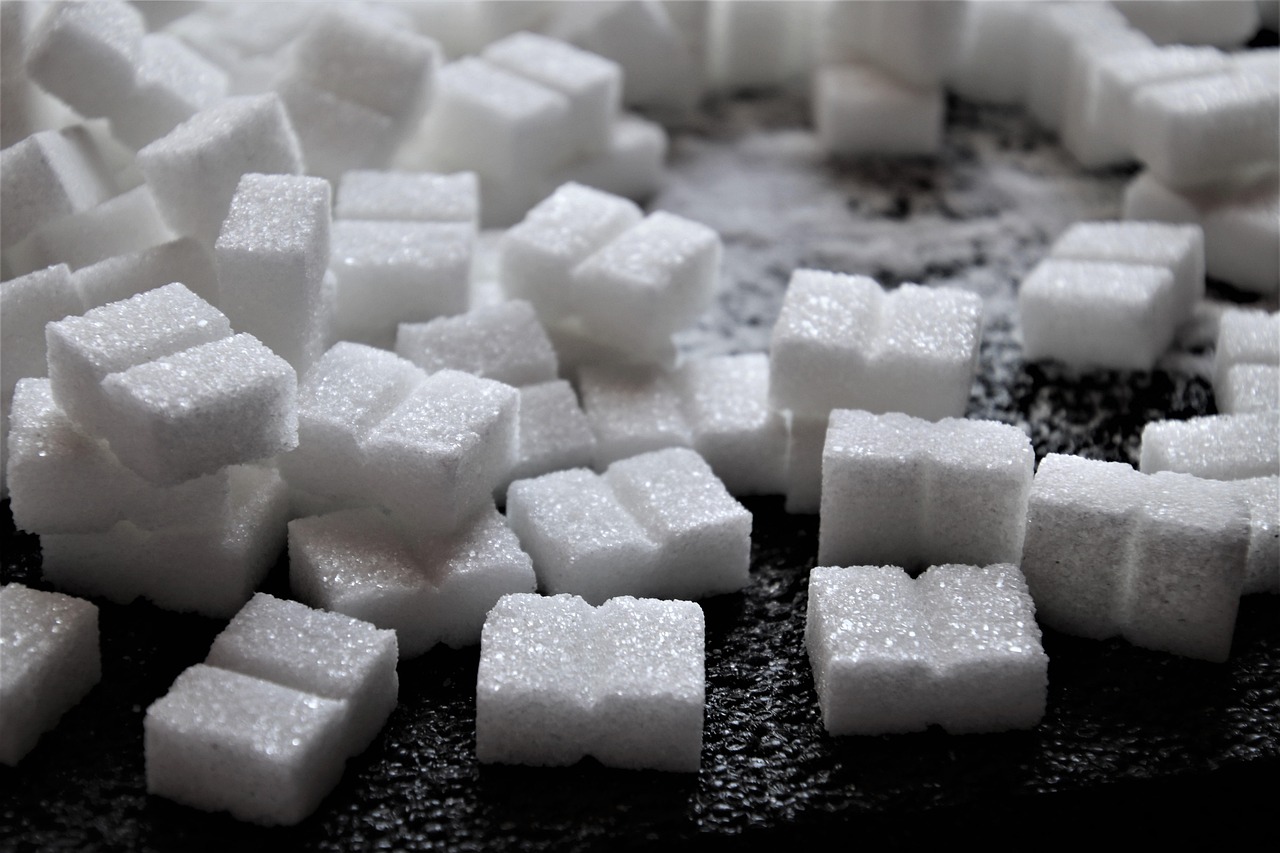
The idea of sugar addiction has received a lot of recent attention. The pain it can cause is immense. Yet it lacks a valid scientific explanation, despite the vast amount of “information” in the media about it. So, what is a myth, and what is the reality of sugar addiction?
Research on “Sugar Addiction”
Research on sugar addiction is limited. In some of the animal studies that have been done, results show that addictive-like behaviors only happen with limited, occasional access to sugar. When the rats are given full access to sugar, those addictive-like behaviors disappear. The results show that restricting and depriving oneself of food creates hunger and a compulsive feeling during eating. This can, in turn, lead to binge eating — a loss of control and perceived overeating. Most strikingly, this research does not show anything about sugar addiction.
In the studies that have been conducted with human participants, the measure of addiction is based on the Yale Food Addiction Scale. This scale, however, is based on people’s self-reported feelings about food. Importantly, it does not include measures related to restriction and deprivation. What does this mean? The scale does not take into account a very tangible factor that causes the feelings of loss of control and guilt around overeating–restriction.
Debunking Common Arguments for Sugar Addiction
Does Sugar Cause Dopamine “Hits”?

One of the common statements used as evidence for sugar addiction is that sugar lights up the same parts of the brain that are activated by ingesting an addictive drug. When a person uses an addictive drug, dopamine neurons fire in the brain and provide feelings of pleasure and reward. Some claim that sugar also activates dopamine neurons. However, recent research shows that the increase in dopamine levels following sugar intake depends on hunger levels (Darcey et al., 2025), suggesting that dopamine studies measure hunger, not addiction. This makes sense. When the body is underfed (whether due to dieting or other factors), the desire for food becomes stronger and more intense. The brain responding to hunger is survival, not addiction.
Additionally, dopamine is not only released when we eat sugary foods or take addictive drugs. We get dopamine “hits” when we listen to our favorite music, get sunlight, spend time with friends and loved ones, and engage in any pleasurable activity. These activities are not classified as addictive, so why is sugar?
Does Sugar Cause Cravings?
Another argument is that sugar can have a pull strong enough to feel like an addiction. However, to truly understand why this may be happening, we need to examine the factors that could be contributing to these sugar cravings.
- When a body is starving, it will attempt to obtain the fastest available form of energy. All food, from vegetables to beef, is eventually metabolized. Some foods are converted into essential building blocks for tissue repair and growth. The body converts other foods into vital fat stores to provide fuel. Simple carbohydrates and sugar are broken down into glucose the fastest of all food types. And glucose is the ultimate source of energy. For hungry people, simple carbohydrates and sugar are the body’s first choice for quick access to energy needed to keep the body functioning.
- People sometimes describe having more intense sugar cravings when they’re feeling exhausted. Poor sleep or no sleep can increase our bodies’ energy requirements to keep us going throughout the day. This can act similarly to starvation — our bodies prompt us to consume foods that quickly break down into usable energy.
- Stress is often described as a precursor to cravings for sugar. Research indicates that cortisol, the hormone associated with stress, is positively correlated with ghrelin, the hormone that stimulates hunger. There is insufficient evidence to demonstrate that cortisol increases ghrelin levels. However, this correlation suggests that stress can make us feel hungrier. And, not surprisingly, when our bodies are in a “starvation” state, they tend to seek out the fastest form of energy input.
How to Get Help for Your “Sugar Addiction”

All things considered, sugar addiction is an oversimplifying and pathologizing term. It is completely natural for our bodies to drive us towards foods that provide quick, reliable energy. It is also completely natural for us to feel cravings and rewards when we have sugar or other foods we’ve avoided after periods of deprivation and starvation. And there is nothing wrong with enjoying sugar-rich foods.
If you struggle with the uncomfortable or even painful feelings associated with “sugar addiction,” remember that you are not at fault and you are not alone. The dieting culture across many societies makes us susceptible to feeling addicted to food groups that are labeled “unhealthy.” It’s no wonder you feel out of control around sugar. Your body is just responding to powerful biological and psychological drivers. But the good news is that help is available. And the solution is often different from what you’d expect. The solution to eating that feels out of control is eating more, not less.
Get Help for Your Eating Disorder in California
If you or someone you know feels addicted to sugar or other foods, contact EDTLA. Our experienced eating disorder clinicians can help guide you toward a lifetime of food freedom.
Your “Sugar Addiction” is Treatable Through Binge Eating Disorder Therapy in Los Angeles, CA
If you’ve spent years believing that your struggle with sugar is a personal failure or a sign of addiction, binge eating disorder therapy can help you reframe that story entirely. You can finally experience a more peaceful, flexible relationship with food. Understanding that your cravings are rooted in biology, not weakness, is just the beginning. Working with an eating disorder therapist means getting the tools and support to break the cycle for good.
You don’t have to keep white-knuckling your way through sugar cravings or cycling through guilt every time you feel out of control around food. Evidence-based therapy addresses the restriction, deprivation, and disordered eating patterns that are most likely driving what feels like addiction. Replacing shame and confusion with clarity, consistency, and genuine food freedom. At our Los Angeles eating disorder therapy practice, our compassionate therapists specialize in helping teens and adults recognize and treat binge eating disorder and related concerns with a weight-inclusive, non-diet approach that works with your body rather than against it. Here’s how to get started:
- Reach out to Eating Disorder Therapy LA directly. We’re ready to help you find answers.
- Fill out our brief Google form, and we’ll connect you with a binge eating disorder specialist in Los Angeles, CA.
- Begin your journey toward food freedom, where no food is the enemy and eating feels safe again.
Other Services EDTLA Offers in Los Angeles, California
For many people, discovering that their struggle with food is rooted in an eating disorder rather than addiction is both a relief and a turning point. That’s exactly where specialized therapy begins. With the right specialized support, you can expect to move away from the guilt and confusion surrounding food, develop a healthier and more flexible relationship with eating, and finally experience the food freedom that restriction and diet culture have kept just out of reach.
At Eating Disorder Therapy LA, our therapists offer individualized, evidence-based, weight-inclusive care to a wide range of clients, including adults, college students, children, teens, and caregivers, across the full spectrum of eating disorders and related concerns. In addition to Binge Eating Disorder treatment, we provide specialized therapy for Anorexia Nervosa, Atypical Anorexia, Bulimia Nervosa, Avoidant/Restrictive Food Intake Disorder (ARFID), and Family-Based Treatment (FBT). Our team also offers support for Excessive Exercise, Body Image challenges, and Phobias Related to Swallowing, Choking, and Vomiting.
To ensure that high-quality care is within reach for as many people as possible, our Los Angeles therapy practice offers both online counseling and group therapy for eating disorders, as well as small group FBT and ARFID consultations, eating disorder education, speaking and training, school programs, and clinical supervision for eating disorder therapists.
We invite you to visit our Eating Disorder Blog and explore Dr. Mulheim’s published books for additional insight and support: When Your Teen Has an Eating Disorder and The Weight-Inclusive CBT Workbook for Eating Disorders (available in 2026). To speak with our team directly, call (323) 743-1122 or email Hello@EDTLA.com. We look forward to helping you understand what’s really driving your relationship with food and guiding you toward lasting healing.
Sources
Avena NM, Rada P, Hoebel BG. Evidence for sugar addiction: behavioral and neurochemical effects of intermittent, excessive sugar intake. Neurosci Biobehav Rev. 2008;32(1):20-39. doi: 10.1016/j.neubiorev.2007.04.019. Epub 2007 May 18.
Azzam, I., Gilad, S., Limor, R., Stern, N., & Greenman, Y. (2017). Ghrelin stimulation by hypothalamic-pituitary-adrenal axis activation depends on increasing cortisol levels. Endocrine Connections, 6(8), 847–855.
Brown, R. M., & James, M. H. (2023). Binge eating, overeating and food addiction: Approaches for examining food overconsumption in laboratory rodents. Progress in neuro-psychopharmacology & biological psychiatry , 123 , 110717. https://doi.org/10.1016/j.pnpbp.2023.110717
Darcey, V. L., Guo, J., Chi, M., Chung, S. T., Courville, A. B., Gallagher, I., Herscovitch, P., Joseph, P. V., Howard, R., La Noire, M., Milley, L., Schick, A., Stagliano, M., Turner, S., Urbanski, N., Yang, S., Zhai, N., Zhou, M. S., & Hall, K. D. (2025). Brain dopamine responses to ultra-processed milkshakes are highly variable and not significantly related to adiposity in humans. Cell Metabolism, 37(3), 616–628.e5. https://doi.org/10.1016/j.cmet.2025.02.002
Meule, A. (2015). Back by popular demand: A narrative review on the history of food addiction research. Yale Journal of Biology and Medicine, 88(3), 295–302.
Piccinni, A., Marazziti, D., Veltri, A., & Dell’Osso, L. (2021). Food addiction and psychiatric comorbidities: A review of current evidence. Eating and Weight Disorders, 26(4), 1049–1056.
Vasiliu, O. (2022). Current status of evidence for a new diagnosis: Food addiction—A literature review. Frontiers in Psychiatry, 12, 824936.
Westwater, M. L., Fletcher, P. C., & Ziauddeen, H. (2016). Sugar addiction: The state of the science. European Journal of Nutrition, 55(Suppl 2), 55–69.