Weight loss is probably on your mind these days. GLP-1 medications—Ozempic, Wegovy, Zepbound—have made it more accessible than ever, and the conversation around it has shifted quickly. But medication is only one path to feeling better in your body. Here’s what’s worth knowing, whether you’re taking one of these drugs or just thinking about it.
Our Culture Is Fatphobic
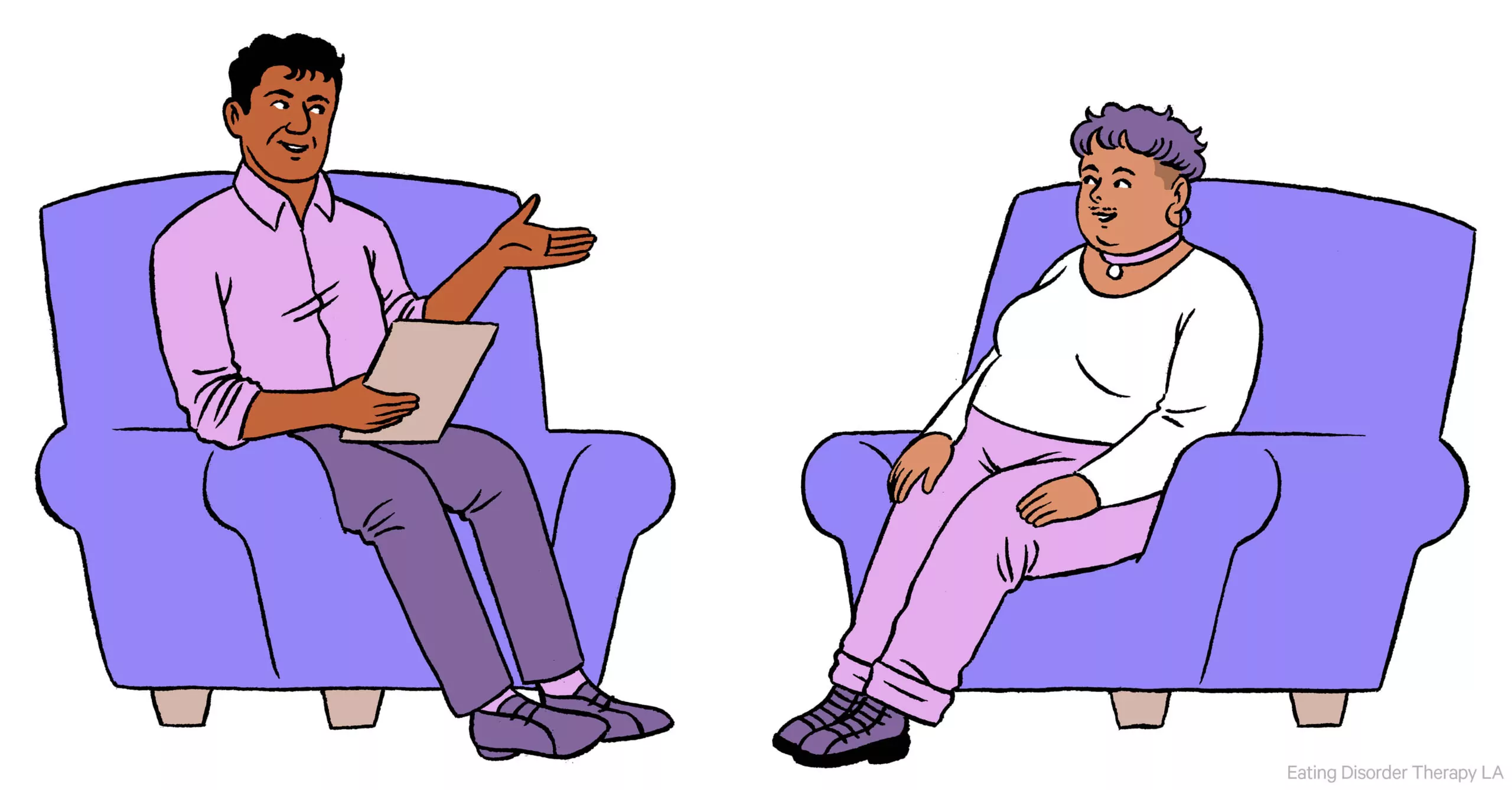
It’s normal to feel pressure to be thinner. This is the water we all swim in. Our culture treats thinness as a virtue and fatness as a problem to fix. Larger-bodied people face real discrimination in healthcare, hiring, and daily life. Then there’s a diet and wellness industry that profits from our dissatisfaction, plus doctors who blame every symptom on weight before running a single test. Weight loss starts to feel like the only acceptable answer. That’s a societal problem. It’s the backdrop for whatever you decide next about your own body.
Where GLP-1s Have a Place
GLP-1 medications still have a place. For people managing type 2 diabetes or other health risks, they can be genuinely helpful. I’m not here to talk anyone out of a medication their doctor recommends. But caution matters, especially at higher doses used for weight loss rather than diabetes. And especially for anyone with a current or past eating disorder.

In the meantime, the panel recommends screening everyone for a current or past eating disorder before starting a GLP-1 medication (94.7% consensus), along with concurrent evidence-based psychotherapy, like Cognitive Behavioral Therapy (CBT), for anyone with a diagnosed eating disorder who’s taking a GLP-1 (81.6% consensus). Appetite-suppressing medication can be risky for a brain and body already vulnerable to restriction.
Cognitive-Behavioral Therapy for Food and Body Issues
We just saw that anyone with an eating disorder who’s taking a GLP-1 should get concurrent psychotherapy. But therapy isn’t only a companion to medication—it solves a more fundamental problem. GLP-1s can shrink your appetite. They can’t change how you think about food, or how you feel about your body. That’s where CBT for eating disorders comes in, whether you’re on a GLP-1 or not.

CBT can help you develop a better relationship with food. Rather than just numbing your hunger cues and reinforcing restriction like a GLP-1, CBT can help you achieve lasting relief from cycles of binge eating. CBT helps clients to eat more regularly and flexibly. It addresses the thinking patterns that keep this cycle going: all-or-nothing rules about food and other rigid beliefs about eating.
Body image-focused CBT helps you build a different relationship with your body, one that doesn’t depend on it changing size. That work includes challenging internalized weight stigma—the beliefs about bodies we’ve absorbed from the culture around us—and understanding how much of what we feel about our bodies comes from outside us, not from the body itself. It also means neutralizing negative body thoughts, and cutting back on body checking: the mirror-checking, pinching, and comparing that keep you hyperfocused on your body. We also work on building self-esteem and self-compassion, developing coping skills, and reconnecting with what matters to you in life.
What We Still Don’t Fully Know About GLP-1s
We also still don’t know a lot about GLP-1s. If you’re using them for weight loss, it’s worth going into it with your eyes open:
- Most of the safety data comes from lower doses. The years of research and experience with these drugs come from treatment for people with diabetes, not from the more recent prescriptions for weight loss (often at higher doses). Rare but serious reports—including intestinal blockage—are still emerging. My own father-in-law developed two intestinal blockages after taking increased doses of Ozempic for his type 2 diabetes. Both times, he ended up in the hospital. “People need to be very careful,” he told the New York Post. “This drug is not for something like weight loss.”
- They can stop working. Effectiveness can plateau or fade over time, sometimes well before you’ve reached a goal weight.
- Weight and binge eating can often rebound when you stop. A follow-up to the STEP 1 trial found that people who stopped taking the medication regained about two-thirds of the weight they’d lost within a year. Patients and clinicians have also reported binge eating resurfacing after stopping the medication.
- We don’t have long-term data on GLP-1s in people with eating disorders. There’s essentially no research tracking people with eating disorders who are on GLP-1s long-term. We don’t know what these drugs do to that group over years of use — only what happens in the first several months.
- Some of the positive narrative is manufactured. According to a 2026 analysis in Fat Studies, doctors with undisclosed financial ties to drug manufacturers — and research that downplays less favorable findings — are behind a lot of the glowing GLP-1 coverage you’re seeing. Keep that in mind before you take any single headline at face value.
Ready for Body Image or Eating Disorder Therapy?
Maybe you’re on a GLP-1. Maybe you’re considering it. Or maybe you’ve decided medication isn’t for you. Whatever the case, your relationship with food and your body deserves support beyond a prescription — and that support is available online or in our office in Los Angeles. Reach out to Eating Disorder Therapy LA.
About the Author
Dr. Lauren Muhlheim is a psychologist, Certified Eating Disorder Specialist Consultant (CEDS-C), and Fellow of the Academy for Eating Disorders. She owns Eating Disorder Therapy LA, 4929 Wilshire Blvd., Suite 1000, Los Angeles. The practice provides evidence-based, weight-inclusive treatment for binge eating, bulimia, and eating disorders across the age range. She wrote When Your Teen Has an Eating Disorder and co-wrote The Weight-Inclusive CBT Workbook for Eating Disorders. Call 323-743-1122 or visit eatingdisordertherapyla.com to learn more.
Sources
“Diabetic Dad Claims Ozempic Left Him ‘Fighting for His Life.’” New York Post, November 14, 2023. https://nypost.com/2023/11/14/health/diabetic-dad-claims-ozempic-left-him-fighting-for-his-life/
Chastain, R., Meadows, A., & Adams, L. (2026). GLP-1 medications for weight-loss: A triumph of marketing over patient care. Fat Studies, 15(2), 183–200. https://doi.org/10.1080/21604851.2026.2646492
Keshen, A., Koning, E., Allison, K. C., et al. (2026). Consensus-based clinical and research recommendations for use of glucagon-like peptide-1 receptor agonists in the context of eating disorders: A modified Delphi study. World Psychiatry, 25(3), 465–474. https://pubmed.ncbi.nlm.nih.gov/42742590/
Wilding, J. P. H., Batterham, R. L., Davies, M., et al. (2022). Weight regain and cardiometabolic effects after withdrawal of semaglutide: The STEP 1 trial extension. Diabetes, Obesity and Metabolism, 24(8), 1553–1564. https://doi.org/10.1111/dom.14725
Other sources
Medical Student for Size Inclusivity
Weight and Healthcare Substack
Other posts
Eating Disorder Therapy Vs. Ozempic and Other GLP-1s
Four Things You Should Know Before Jumping on the Ozempic Bandwagon