TL;DR
Parenting a teen with an eating disorder during Family-Based Treatment (FBT) is challenging. Parents need to balance normal parenting with the unique demands of recovery, which often involves refeeding at home. It’s important to distinguish between behaviors stemming from the eating disorder (like defiance during meals) and typical teenage rebellion. During high-stress moments related to food or treatment, respond with compassion rather than reprimand. Outside of these moments, maintain normal parenting expectations, but pick your battles to avoid overwhelming your teen. Focus on behaviors affecting recovery and treatment goals, and seek guidance from treatment providers when needed. Remember, you can still parent effectively while supporting your teen’s recovery.
What Should Every Parent Keep In Mind During FBT?
Parenting during FBT is a different type of parenting. Parents doing Family-Based Treatment (FBT) often struggle with “normal parenting concerns” and setting limits while doing FBT. They’re refeeding their teens at home. They’re doing the hard work often done by professional staff at treatment centers. But, they still have to parent. It’s exhausting. Their teens who have eating disorders are often experiencing the psychological and physical consequences of malnutrition while also being a teen. They’re still facing the challenges that typically come with that stage of life. Social and academic pressures, family stresses, desire for more independence, and puberty.
It’s not uncommon for teens to be a little rebellious or to challenge limits. Some parents may feel they should ignore any defiance from teens in recovery. Or they may be afraid to confront behaviors they would normally not tolerate in their children. Other parents may want to clamp down on all undesirable behaviors.

In FBT, we talk about separating the child from the eating disorder and joining with and loving your child. While at the same time, waging war against the eating disorder threatening your teen’s life. This model may be helpful in decisions about how to parent. I recommend first trying to determine whether the behaviors you are concerned about are part of the ED or not.
Try To Decipher Whether It’s an Eating Disorder Behavior
This may not be obvious at first glance. Look for signs of defiance, anger, disrespectful language, or threatening behavior at certain times. Just before, or after meals, or during an appointment with your FBT therapist, or a weight check, or around discussions of food, body, the eating disorder, or treatment. When this happens, it’s safe to assume it’s the eating disorder and not your child. Remember that your child with an eating disorder has a decreased ability to regulate emotions. This is a result of malnourishment, and they are in a state of terror at these times. It is the fight-or-flight reaction seen during episodes of high anxiety. The eating disorder will make them lash out in hopes of avoiding the source of the anxiety (food, weighing, etc.). During those moments, I recommend speaking to them compassionately. Recognizing the underlying emotion of anxiety without reprimanding the behavior in the moment.
During times outside of meals or treatment—which may seem few and far between for those just beginning this journey—this behavior is less likely to “be the ED.” At these times, you should parent largely as you would normally do. With the caveat that your child is under increased stress from treatment. If you would normally reprimand or give a consequence to your child for inappropriate language, staying out after curfew, or screaming at you, feel free to do so. You do not have to tolerate rudeness and defiance and can require appropriate behavior.
Remember That Recovery is Stressful
As you do this, do keep in mind that the intense process of recovery—including exposure to what is often 6 meals per day—is putting your child under additional stress. I like to remind parents that in many cases, teens go to residential treatment centers. While these centers have their pros and cons, one helpful aspect of residential treatment is that it removes the teen from the everyday stresses of school and home life. Things like an annoying brother, curious extended family members, or a heavy academic load. This separation allows them to focus entirely on treatment. It can be easy to overlook how these stressors add up.
Given this, parenting during Family-Based Treatment might look a little different.
Pick Your Battles As a Parent
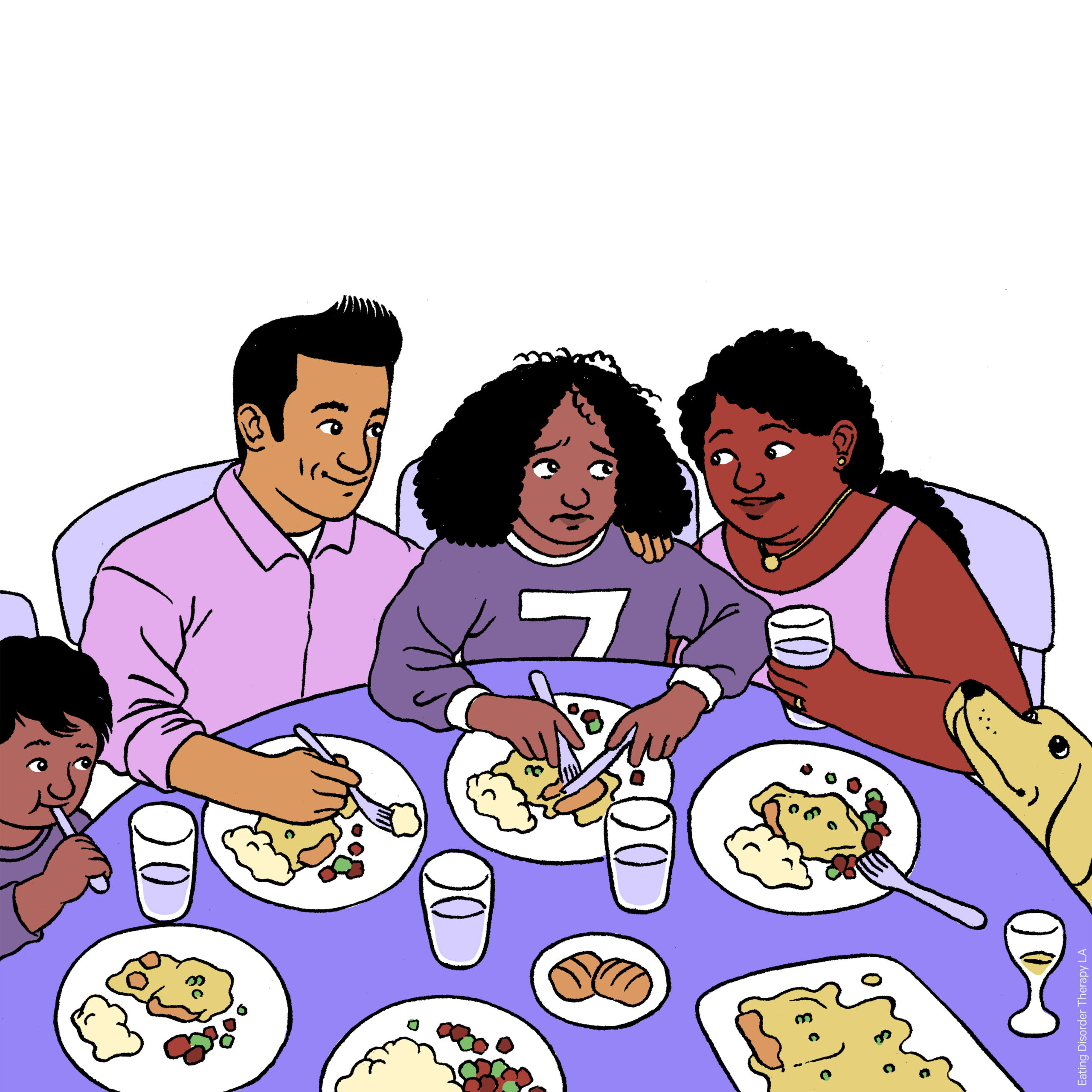
You might want to pick your battles so your teen doesn’t feel battered all the time. Some smaller things—like clothes on the floor of their room or not cleaning their bathroom—may need to be overlooked. You will want to prioritize addressing behaviors that affect you—for example, rude language—or that interfere with the goals of treatment, including weight gain and normalizing eating. So, if your teen doesn’t come back in time from an outing with friends and misses a snack or meal, that would be a high priority to address. On the other hand, you might choose to let go of their not going to bed on time (as long as it doesn’t keep them from getting up in time for breakfast).
If you are unsure whether the behaviors are part of the eating disorder or not, and how to respond, I encourage you to consider whether their behavior is different from what it was prior to the eating disorder. A normal developmental trajectory may be contributing to the changes in behavior. An older adolescent may be more challenging of authority and may exhibit behaviors that were not a part of the repertoire 6 to 9 months earlier, before the start of the eating disorder.
Try to Understand the Behavior
If the behavior is different, consider whether it might be related to the stress of recovery, the result of malnutrition, or something else entirely. If it seems different and/or persists, speak to your treatment providers or have your child assessed. It may be that they have another mental health disorder that needs to be addressed. If the behaviors were there before the eating disorder, you should also talk to your treatment providers and see if additional support is needed to help you address them.
Finally, keep in mind that this is a tough time. You have a lot on your plate. Parenting and treating an eating disorder is a lot all at once. Try to separate your teen from their eating disorder and develop a list of priority behaviors to address so you don’t take on too much at once. At EDTLA, we encourage parents to talk to their treatment team about their concerns. And remember, you don’t have to abdicate all parenting just because you are also on their treatment team.
 Recommended Reading For Parent Learning
Two of my favorite teen parenting books:
Get Out of My Life, But First Could You Drive Me & Cheryl to the Mall?: A Parent’s Guide to the New Teenager by Anthony E. Wolf
Parenting Teens with Love and Logic: Preparing Adolescents for Responsible Adulthood by Jim Fay and Foster Cline
Get Parenting Support and Guidance Through Family-Based Treatment (FBT) in Los Angeles, CA
Parenting a teen through eating disorder recovery can bring up uncertainty about when to step in, when to set limits, and how to stay supportive without escalating conflict. Family-based treatment (FBT) offers a clear, evidence-based framework that helps parents take an active role in restoring health, setting appropriate boundaries, and supporting recovery with confidence and compassion.
You don’t have to figure this out on your own. Through FBT, families receive structure, education, and professional guidance to navigate mealtimes, resistance, and limit-setting while keeping recovery on track. At Eating Disorder Therapy LA, our Los Angeles–based therapists specialize in family-based treatment for adolescents with anorexia, bulimia, and related eating disorders, and work closely with parents to build skills that support both healing and healthy development. Getting started is simple:
- Contact EDTLA to talk through parenting challenges and treatment options
- Complete our Google form so we can match your family with an experienced FBT therapist in Los Angeles, CA
- Begin supporting your teen’s recovery with clarity, structure, and confidence
Other Services Eating Disorder Therapy LA Offers in Los Angeles, California
Supporting a teen with an eating disorder often requires parents to take on unfamiliar roles—setting firm limits while staying emotionally supportive. Family-based treatment (FBT) provides clear structure and professional guidance so caregivers can help restore health, reduce conflict around food, and build a foundation for long-term recovery.
At Eating Disorder Therapy LA, we offer comprehensive, evidence-based care for individuals and families across all stages of life, including children, adolescents, adults, college students, and caregivers. Our experienced clinicians treat the full spectrum of eating disorders and related concerns. In addition to FBT, we provide specialized treatment for Anorexia Nervosa, Atypical Anorexia, Bulimia Nervosa, Binge Eating Disorder, and Avoidant/Restrictive Food Intake Disorder (ARFID), as well as support for excessive exercise, body image distress, and phobias related to swallowing, choking, or vomiting.
To support families in a variety of circumstances, our Los Angeles-based practice offers flexible care options, including online therapy and eating disorder group therapy. We also provide Small Group FBT and ARFID consultations, professional speaking engagements, school-based services, and clinical supervision for therapists seeking advanced expertise in eating disorder treatment.
For additional education and parenting guidance, we invite you to explore our eating disorder blog and Dr. Muhlheim’s books, When Your Teen Has an Eating Disorder and The Weight-Inclusive CBT Workbook for Eating Disorders (available in 2026). To connect with our team, please call (323) 743-1122 or email Hello@EDTLA.com. We look forward to supporting your family with clarity, confidence, and care.
About the Author
Dr. Lauren Muhlheim, Psy.D., FAED, CEDS-C, is the founder of Eating Disorder Therapy LA and a licensed psychologist with extensive experience treating eating disorders in children, adolescents, and adults. Her clinical work centers on evidence-based treatment for anorexia, bulimia, binge eating disorder, ARFID, and related concerns, with particular expertise in family-based treatment (FBT) for teens. As one of the few FBT-certified therapists in Los Angeles, Dr. Muhlheim works closely with parents to guide nutrition restoration, support recovery at home, and help teens return to healthy development. She is the author of When Your Teen Has an Eating Disorder and The Weight-Inclusive CBT Workbook for Eating Disorders, and has developed one of the only FBT training courses for dietitians. Licensed in California, Indiana, New York, and Oregon, with a Florida telehealth license, Dr. Muhlheim is widely recognized for her leadership in family-centered, weight-inclusive eating disorder care.