Early Intervention with Family-Based Treatment (FBT) for Eating Disorders

A teen girl sits beside a doctor writing notes, illustrating early intervention with Family-Based Treatment (FBT).

TL;DR Early intervention is crucial in addressing eating disorders, which can lead to severe health issues if not treated promptly. Family-Based Treatment (FBT) is a leading, evidence-based approach tailored for teens, emphasizing parental involvement to support recovery. Despite its potential benefits, parents often hesitate to intervene due to uncertainty about the early signs of these …


Read more

Expert Guidance: When to Add an Individual Therapist in FBT-Phase 1

A teen in an individual therapy session, for an article on when to add an individual therapist in Phase 1 of Family-Based Treatment (FBT).

TL;DR In Family-Based Treatment (FBT) for teen eating disorders, experts discourage adding an individual therapist during Phase 1 (nutritional rehabilitation). Most teens do not require individual therapy at this stage, as it can undermine the family’s role and the focus on nutritional restoration. Experts agree that individual therapy should only be considered if there are …

Read more

Are We Setting Recovery Weights Too Low? Insight From an FBT Therapist

A rusty doctor's scale, for an FBT therapist's article on recovery weights that are set too low.

TL;DR At the 2018 International Conference on Eating Disorders, experts discussed the low BMI threshold (18.5) often used to define recovery from anorexia nervosa, suggesting it’s inadequate for many individuals, especially those with higher weights or atypical anorexia. Many parents and practitioners advocate for a more individualized approach to recovery weights, emphasizing that a higher …

Read more

How We Set Recovery Weights and Why It Matters for Long-Term Healing

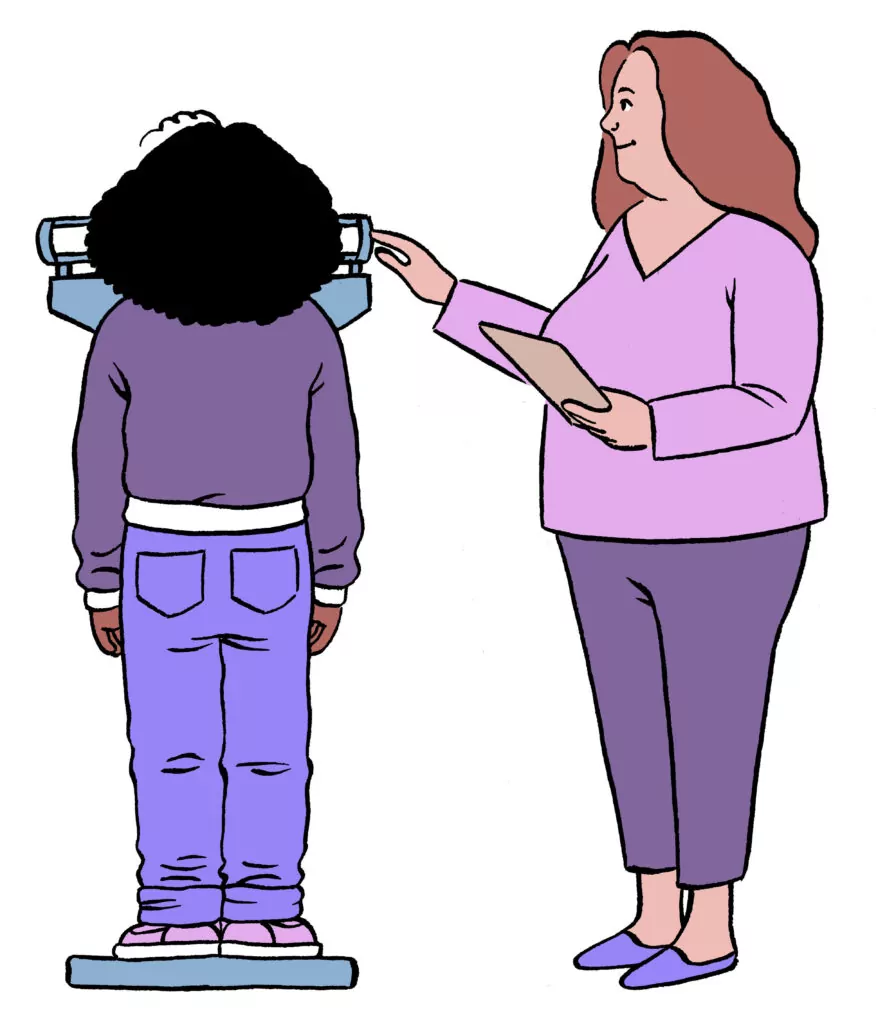
Drawing of a doctor weighing a teen patient, illustrating weight monitoring and recovery weights in Family-Based Treatment (FBT).

TL;DR Weight gain is a vital part of recovery from eating disorders for individuals of all sizes, including those with Atypical Anorexia and bulimia. However, there’s a lack of consensus on how to set appropriate recovery weights. Research shows that complete weight restoration is often essential for psychological recovery, as it helps alleviate eating disorder …

Read more

Should You Let Your Teen Become a Vegetarian?

Purple Scrabble tiles spelling "vegetarian" above a plate of raw vegetables, for an article on teens becoming vegetarian.

By Katie Grubiak, RDN, and Lauren Muhlheim, Psy.D. We acknowledge that vegetarianism can offer benefits for both individuals and the environment. We also recognize that vegetarianism is embedded in some cultures and religions, and most children and teens raised in these cultures thrive. This article does not aim to debate the ethics of vegetarianism. Instead, …

Read more

FBT with Separated and Divorced Families

Drawing of a family of four with a tear between the two parents, illustrating FBT with separated and divorced families.

A common question is whether Family-Based Treatment (FBT) works with separated and divorced families. The answer is definitely yes! The treatment can be implemented in a variety of family configurations as long as at least one parent or guardian is involved in the treatment. But, there is to date, little written about this. Research does …

Read more

Supporting your Child or Other Loved One with an Eating Disorder Through the Holidays

A dressed-up Black family preparing a meal together, for an article on supporting a loved one with an eating disorder through the holidays.

By Carly Poynter, AMFT, staff therapist The holidays are a challenging time to navigate for most people. The holidays are even more challenging for those who struggle with their relationship with food. As we prepare for the holiday feasts and festivities, there are a few things to consider, especially when you have a child or …

Read more

What Parents of Teens with Eating Disorders Need to Understand About Diet Culture

A larger woman smashing a scale, for an article on what parents of teens with eating disorders need to know about diet culture.

Parents and Diet Culture Many parents experience guilt when their teen is diagnosed with an eating disorder. Nearly every parent can point to a time they themselves dieted, opted not to have a dessert they really wanted, expressed a preference toward thinness, or discouraged their child from keeping eating. You may have done things to …

Read more

Externalizing an Eating Disorder: When, Why, and How Do You Do That and Who is “Ed” Anyway?

Drawing of a girl facing a monster, illustrating externalizing an eating disorder.

Externalizing an eating disorder is a therapeutic strategy. Jenni Schaefer’s book Life Without Ed, co-written by her therapist Thom Rutledge, popularized this strategy The book summarizes Jenni’s recovery from an eating disorder. Jenni describes how in her treatment she learned to personify the eating disorder as “Ed,” an abusive boyfriend. As explained in the blurb …

Read more

Adjunctive Therapies to FBT: What are the Additional Therapies That May be Added to FBT? And When Should They Be Added?

Paper in a window that reads "Mindfulness," illustrating adjunctive therapies that can go alongside FBT.

In a previous post, I have discussed who is typically on an FBT team. In its traditional manualized form, the core team is a therapist, a medical doctor, and the parents. The team can also include a registered dietitian nutritionist (to guide the parents) and may include a psychiatrist. It is not uncommon for medical …

Read more

Skip to content