Orthorexia

A young woman in a yellow sweat suit makes a fruit smoothie in a blender, for an article on recognizing and treating orthorexia.

Post by Carly Poynter, Psy.D., staff therapist What is Orthorexia? Orthorexia is an eating disorder in which an individual is fixated on the quality of food and avoidance—in the pursuit of health—of foods labeled as “unhealthy” or “bad.” The person continues to pursue “health” despite experiencing considerable negative health consequences and an impact on psychological …

Read more

Help for Night Eating Syndrome

Drawing of a person in purple pajamas at an open refrigerator, with the moon behind them, illustrating night eating syndrome.

Do you find yourself eating late into the night? Do you wake up and eat large meals before going back to sleep? Have you wondered whether this is an eating disorder? Read on to learn more about the problem and how we can help. What is Night Eating Syndrome? Night Eating Syndrome (NES) is a …

Read more

Eating Disorder Organizations Supporting Diverse Bodies

Purple Scrabble tiles spelling "Eating Disorder Organizations," for a list of groups that support people in diverse bodies.

As an important value in our practice is supporting diverse people with eating disorders, including those in larger bodies.  There are many US-based eating disorder organizations and nonprofits that share our mission and do good work.  Learn more about them below. National Alliance for Eating Disorders The National Alliance for Eating Disorders, previously known as …

Read more

Shopping While Fat

Sharon Maxwell holding clothing at the Plus Bus in Los Angeles, for an article on shopping while fat.

Shopping While Fat–And Recovering by Sharon Maxwell, Practice Manager Growing up, I loved the concept of shopping. But as a fat person, I rarely actually enjoyed it. It wasn’t that I didn’t like shopping or finding new things. However, an invitation to go shopping with friends meant that the message that my body was intrinsically …

Read more

Curate Your Feed with Diverse Body Positive Accounts on Instagram

Instagram post from resilientfatgoddess of a smiling trans nonbinary person, titled "Curate Your Feed With Diverse Body Positive Accounts."

Diverse Instagram Accounts Can Support Recovery by SJ Thompson Belmonte, Resilient Fat Goddex and Lauren Muhlheim, Eating Disorder Therapy LA It’s time to curate your feed to have a more diverse social media feed. “Body positivity can’t be just about thin, straight, cisgendered, white women who became comfortable with an additional ten pounds on their …

Read more

Helping Others in Your Life Understand Your ARFID

Four friends of diverse sizes and skin colors at a picnic table, illustrating helping the people in your life understand your ARFID.

If you (or your child) have Avoidant Restrictive Food Intake Disorder (ARFID), you may have struggled with how to help others in your life understand this little-known disorder and how profoundly it affects you. ARFID can make eating uncomfortable in social situations if you or a child have ARFID. You may experience people trying to …

Read more

Are You Medically Stable for Outpatient Eating Disorder Therapy?

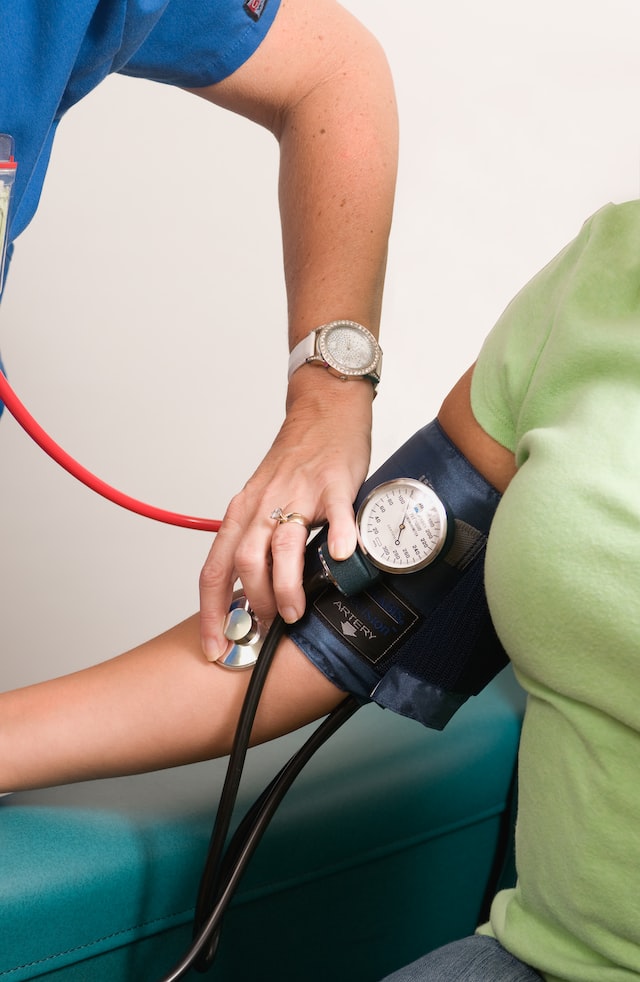
A health professional takes blood pressure on a patient's arm, illustrating medical stability for outpatient eating disorder therapy.

Learn about medical stability and why we are concerned about it. When you contact us to schedule an appointment for yourself or your loved one, our program manager will gather some information that helps determine whether you (or they) need an immediate medical screening and whether the therapy we provide is likely to be effective. …

Read more

Meal Support in Eating Disorder Recovery

Drawing of a woman, seen from behind, eating in front of a computer screen, illustrating online meal support in eating disorder recovery.

Eating disorders are complex and challenging conditions that usually require a multidisciplinary approach to treatment. Regardless of the therapeutic approach and level of care, meal support can be an essential component of eating disorder recovery. Meal support can be beneficial for people of all ages with any eating disorder, including anorexia nervosa, atypical anorexia, bulimia …

Read more

Regular Eating—a Cornerstone of Eating Disorder Recovery

A Black couple smiling as they wash and cut vegetables, illustrating regular eating in eating disorder recovery.

If you have been struggling with an eating disorder or disordered eating, step one of recovery requires the establishment of daily regular eating. This is important for people with anorexia, bulimia, binge eating disorder, and ARFID in all body sizes. Regular eating is one of the earliest goals of Cognitive Behavioral Therapy (CBT) for Eating …

Read more

Skip to content